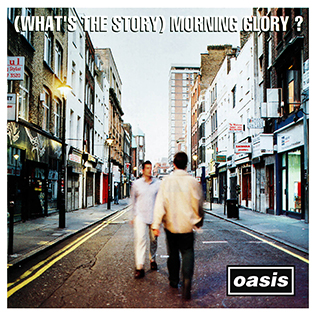
(What's the Story) Morning Glory? is Oasis' second studio album and one of the defining records of the Britpop era. Released in October 1995, the album catapulted the band into global superstardom and became one of the best-selling albums in UK history. It established Oasis as a cultural phenomenon and marked a shift from their raw, guitar-driven debut album, Definitely Maybe, to a more polished and anthemic sound.
Worldwide Sales: Over 22 million copies sold globally.
UK Sales: Over 4.7 million copies sold in the UK alone, making it the fifth best-selling album in British history.
US Sales: The album was certified 4× Platinum by the RIAA, selling more than 4 million copies in the United States.
The album was recorded between May and June 1995 at Rockfield Studios in Monmouth, Wales, the same studio where Queen had recorded Bohemian Rhapsody.
Produced by Owen Morris and Noel Gallagher, the recording process was famously chaotic, with the band members’ intense personalities and drug-fuelled lifestyle leading to volatile sessions. Despite the turmoil, the result was a landmark record.
The production of (What's the Story) Morning Glory? shifted away from the dense wall-of-sound style of their debut album to a more straightforward, anthemic sound. The album’s recording employed multi-tracked guitars, layered vocals, and a more radio-friendly approach that suited stadium performances.
The album represents a significant stylistic departure from the raw energy of Definitely Maybe. Instead, it focuses on:
Melodic Rock: Anthemic choruses, layered harmonies, and melodies designed for stadium singalongs.
Heavily inspired by The Beatles, T. Rex, and Slade, with clear nods to 60s and 70s rock. Noel Gallagher's songwriting also reflects influences from Britpop contemporaries such as Blur, though Oasis adopted a more grandiose, rock-Centred approach.
Oasis - Whats the Story Morning Glory Track By Track with Noel Gallagher
Tracks like "Wonderwall" and "Don’t Look Back in Anger" showcased Noel’s talent for writing emotionally resonant, sing-along ballads. These tracks became staples at Oasis concerts and defined the band’s sound during this era.
Liam & Bonehead on Recording the Album
The lyrics often reflect themes of working-class frustration, youth rebellion, and introspection. Songs like "Champagne Supernova" and "Cast No Shadow" lean into dreamlike, surreal lyrics, further deepening the album's introspective quality.